History
The association was created in 1968, at a time when most southbound traffic from Notting Hill Gate went down Palace Gardens Terrace and Vicarage Gate, when many houses were rather run down, and when the streets had a kerb-crawling problem.
Since then the CTRAA has helped turn the area into a quiet oasis between Notting Hill Gate and Kensington High Street – Kensington Church Street traffic excepted.
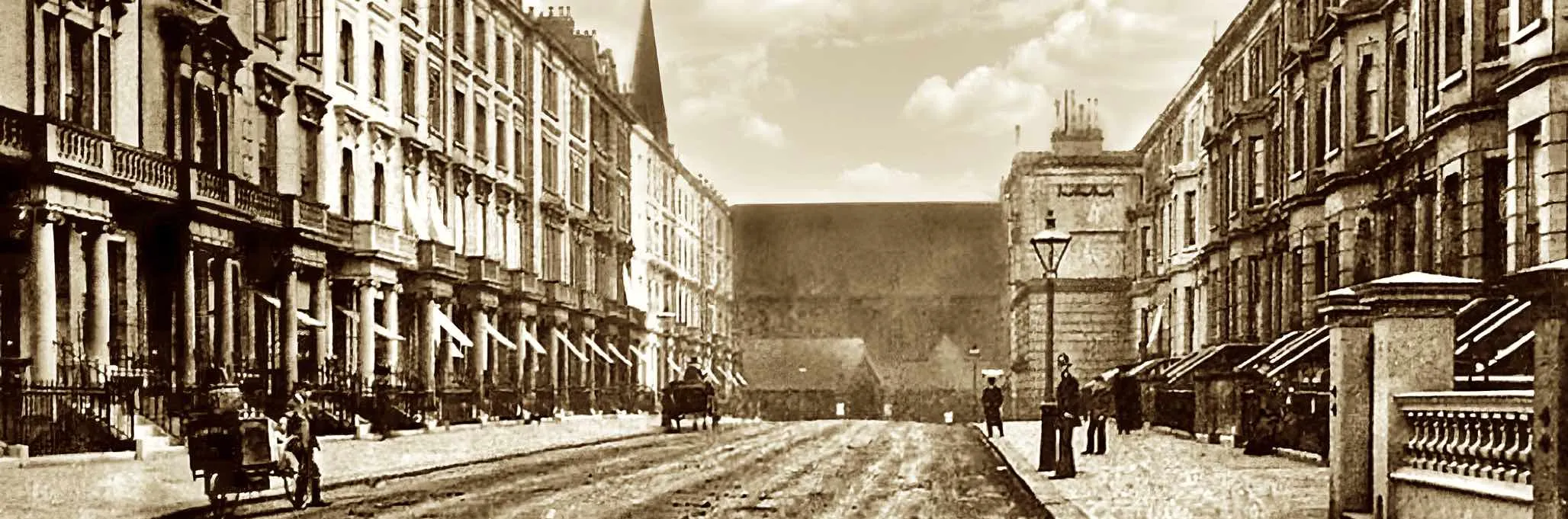
Then and now
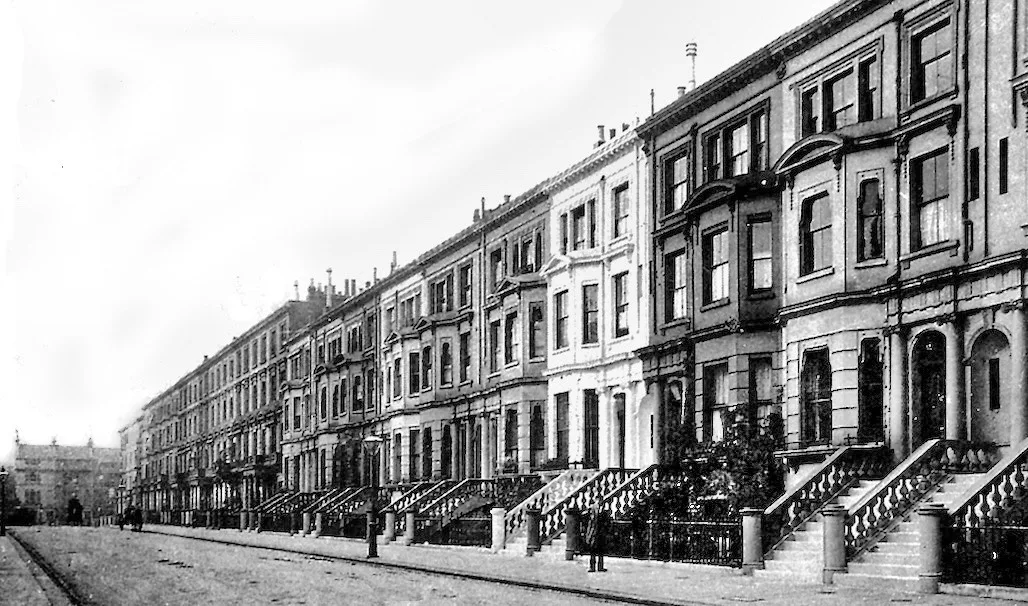
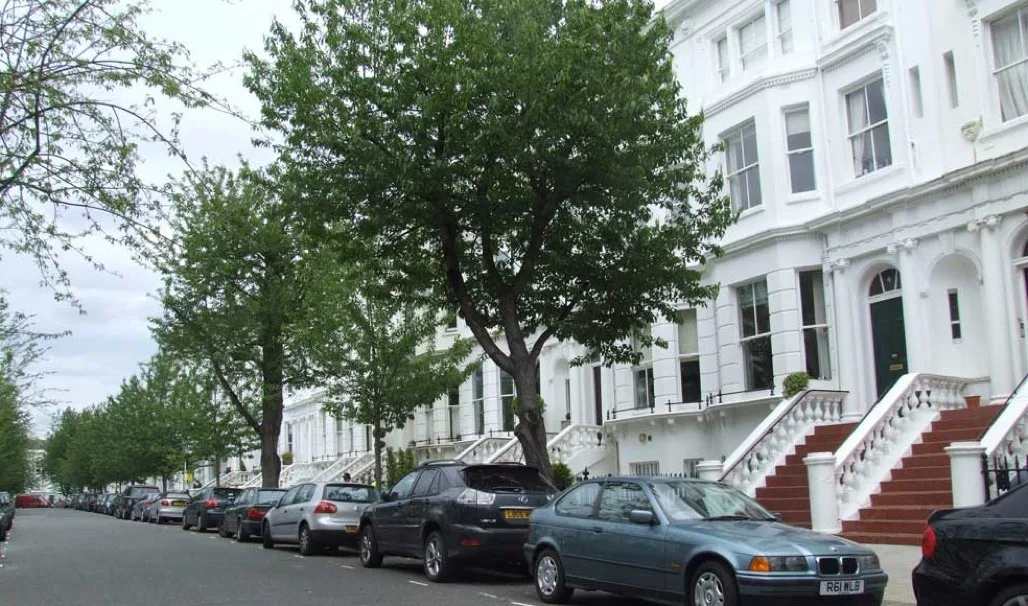
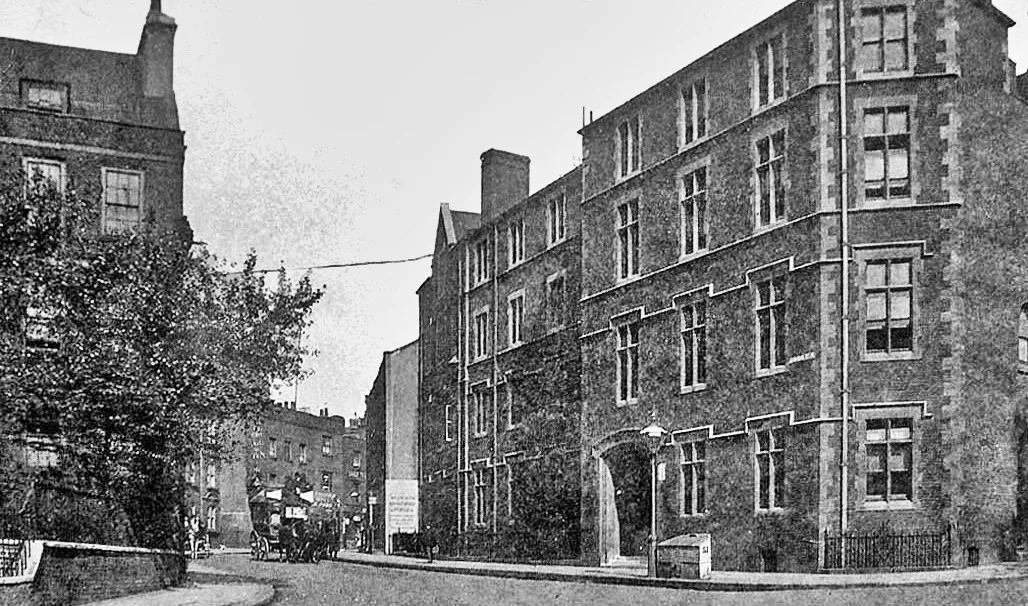
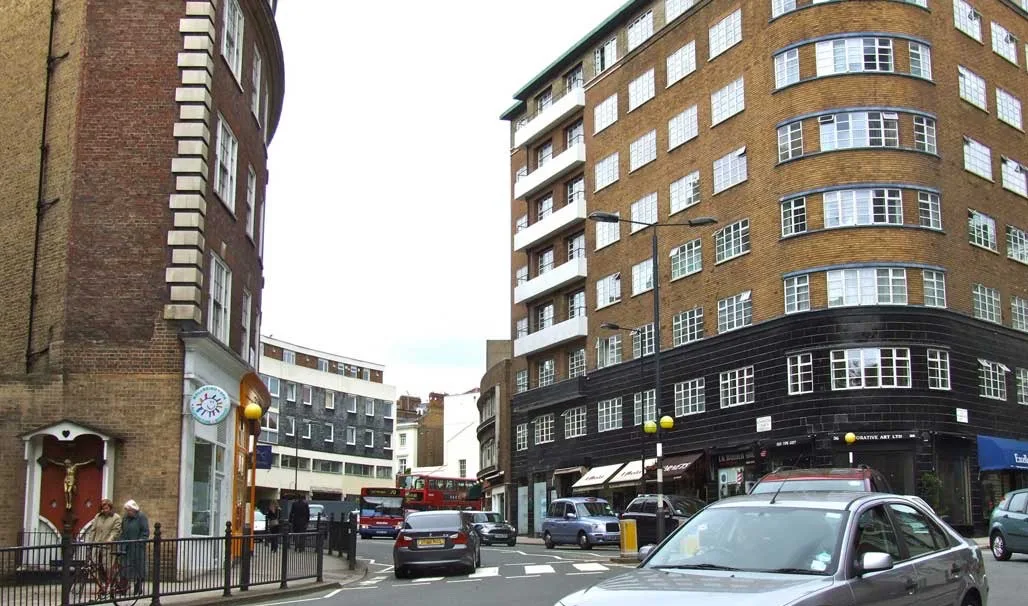
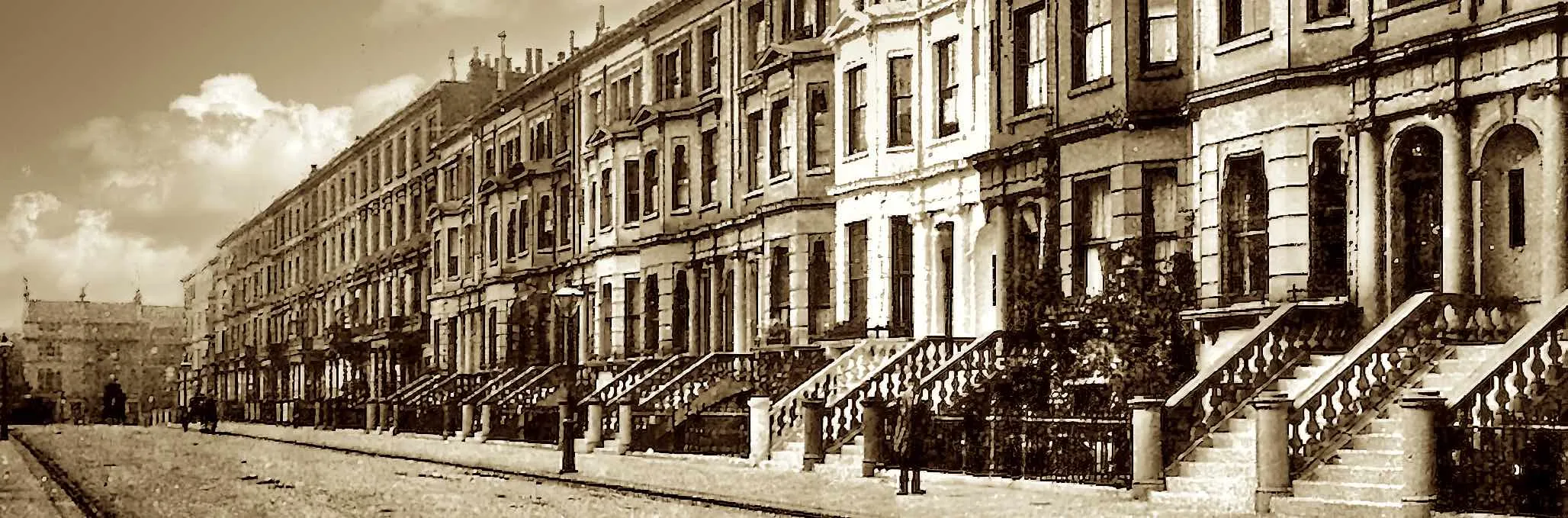
Between 1900 and 1906 a photographer took pictures of our streets. In June 2012 the CTRAA’s web editor stood in the same spots. The houses in Brunswick Gardens and Palace Gardens Terrace haven’t always been white, and without cherry trees or parked cars the streets looked much wider.
Drag across each picture to compare the two years.
Brunswick Gardens
Lower Palace Gardens Terrace
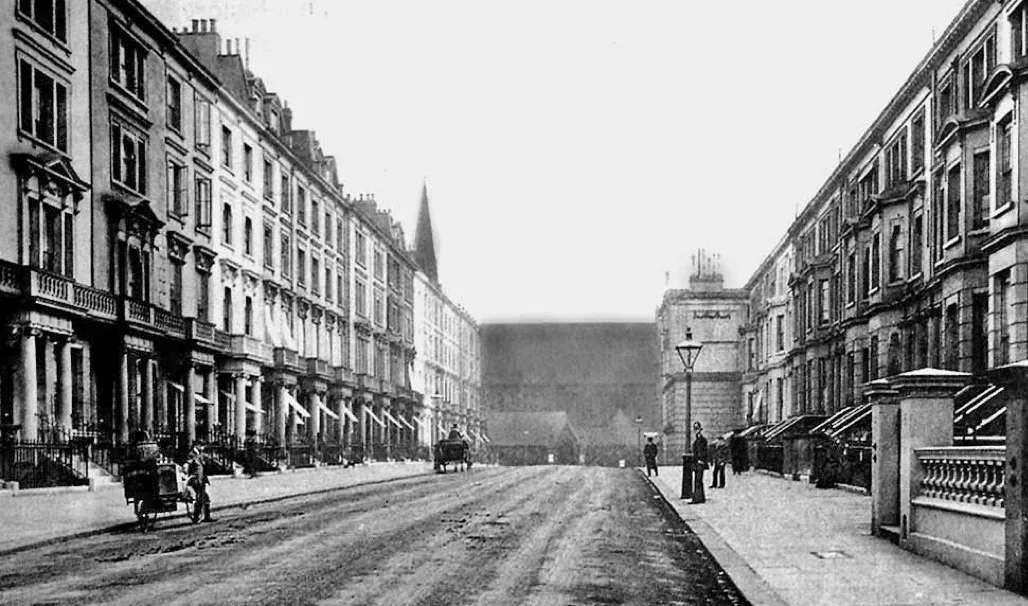
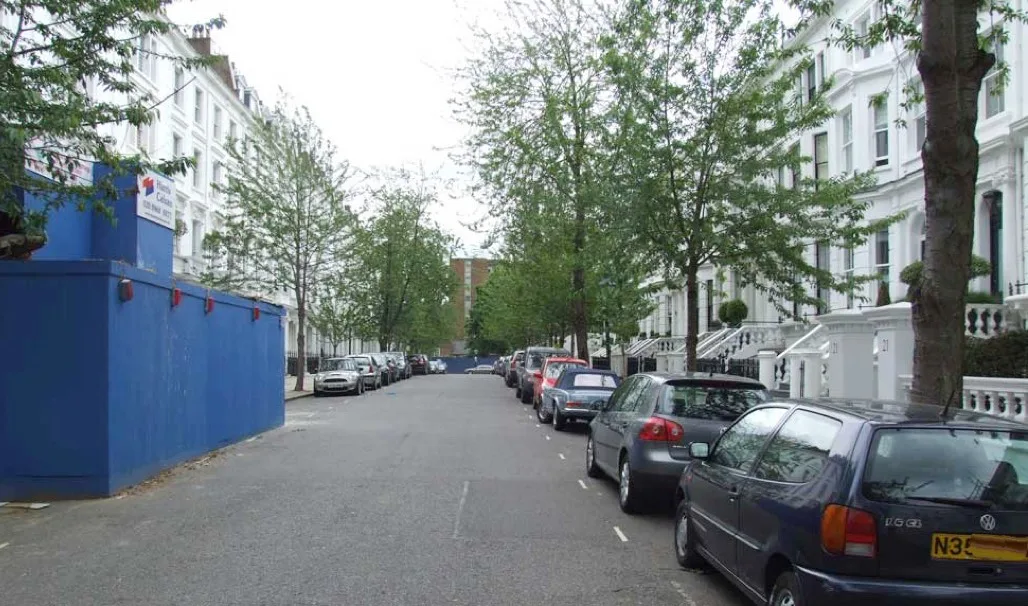
Upper Vicarage Gate
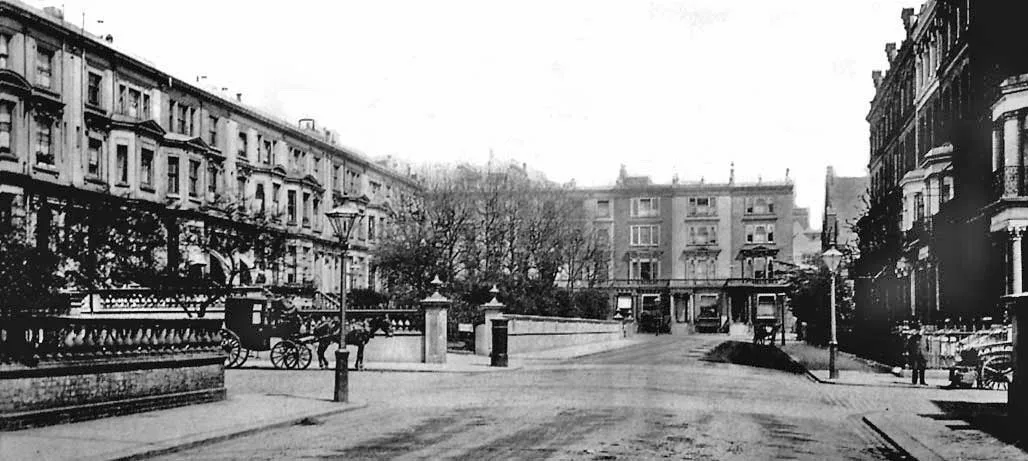
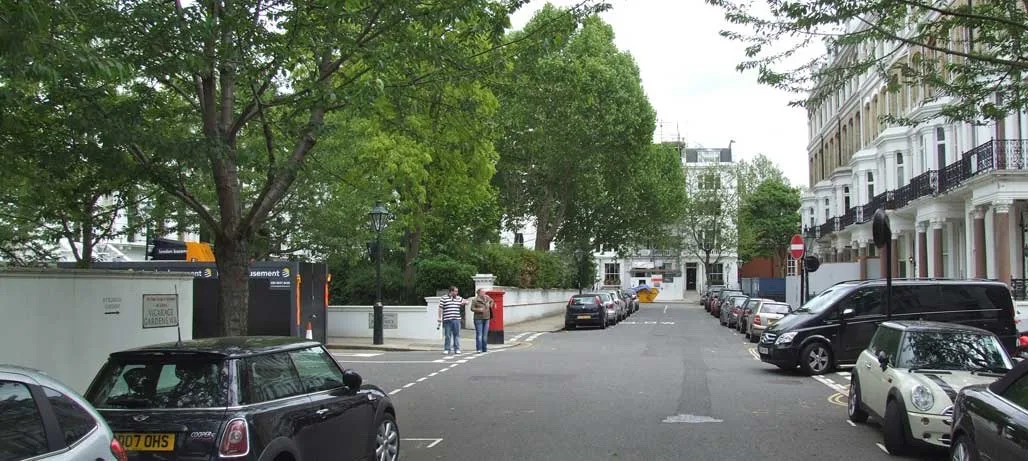
The Kensington Church Street bend
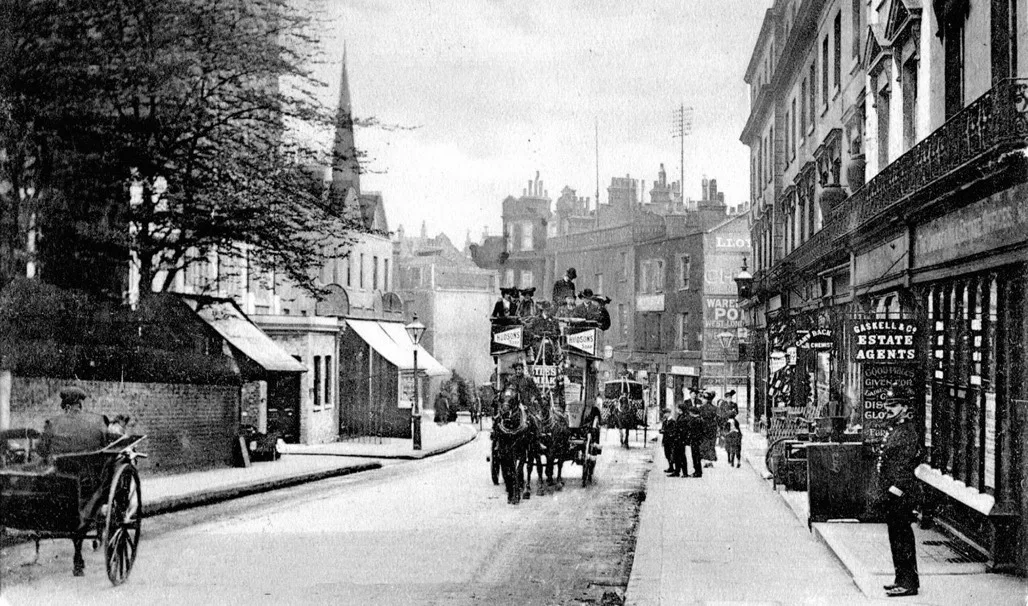
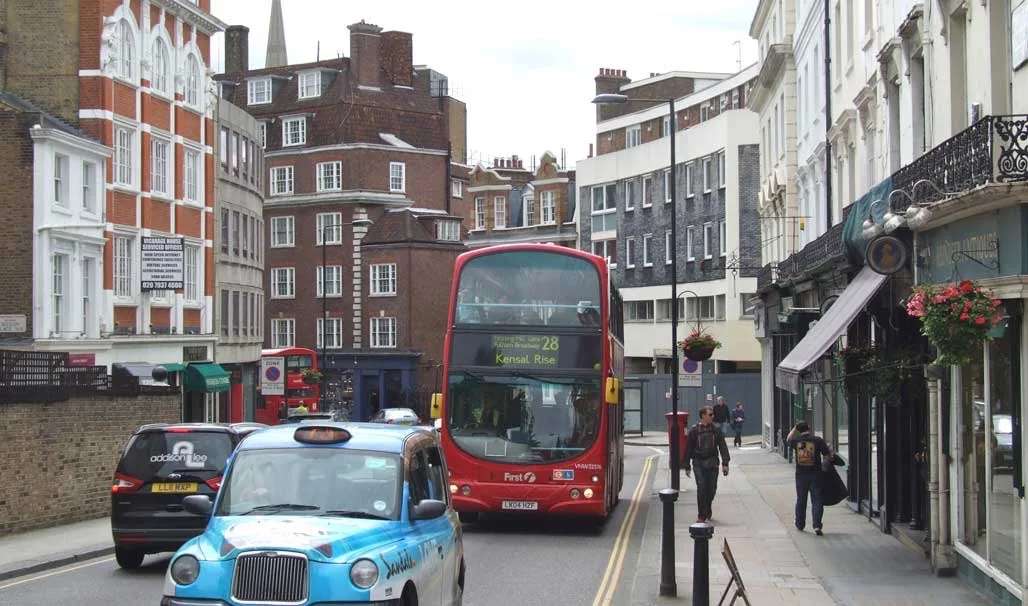
Lower Kensington Church Street
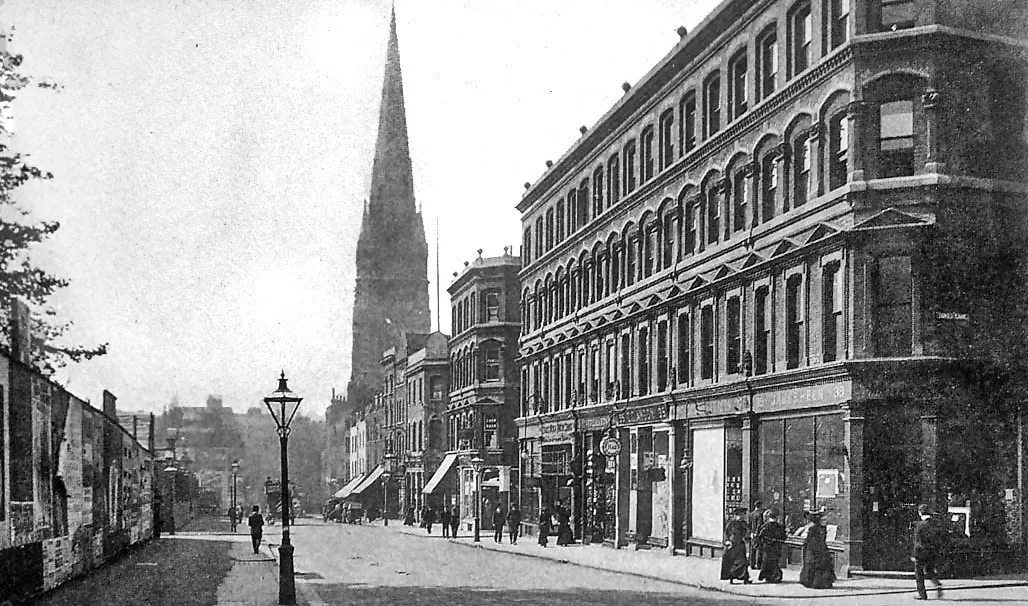
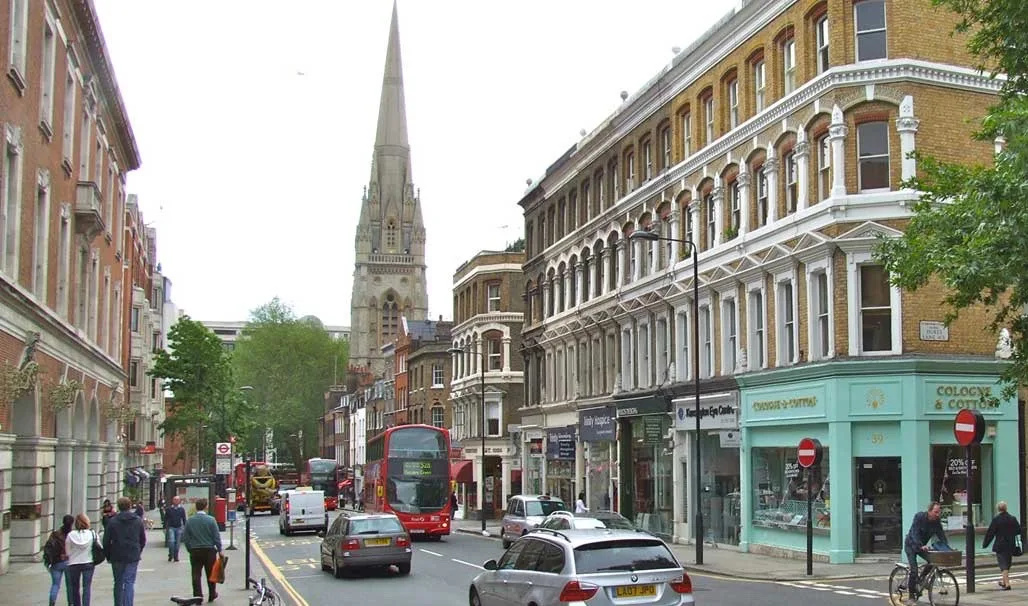
The Winchester Court corner
The Cherry Tree, 1999–2006
From 1999 to 2006 the CTRAA sent members a printed newsletter, The Cherry Tree, two or three times a year. All sixteen issues are here.
-
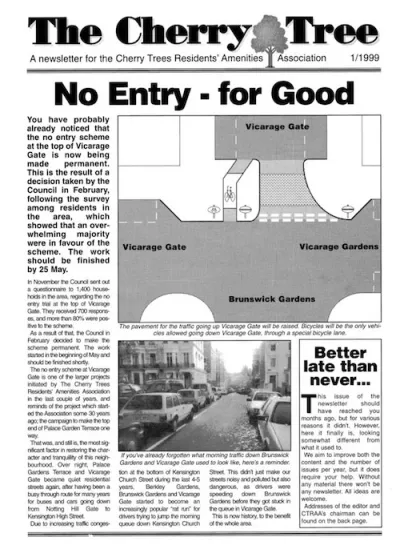 No. 1, 1999
- No entry down Vicarage Gate
- Cycle lane into PGT?
- Good and bad parking
-
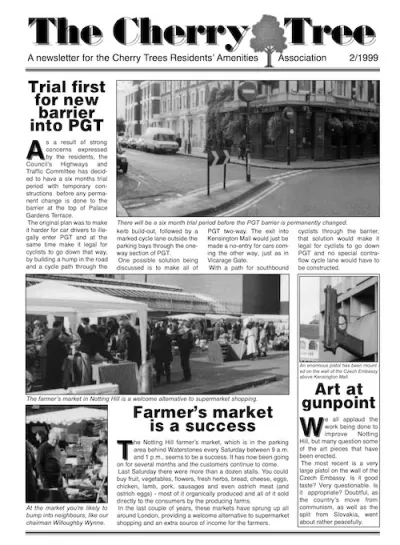 No. 2, 1999
- Barrier at the top of PGT
- Farmers’ market already a success
History: Cherry Trees area
-
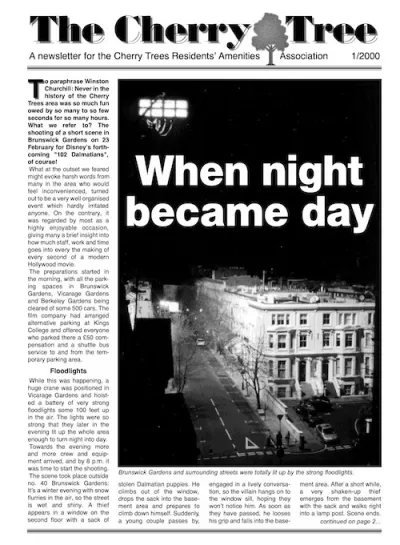 No. 1, 2000
- The filming of 102 Dalmatians
- No entry at top of Vicarage Gate
History: St Paul’s Church
-
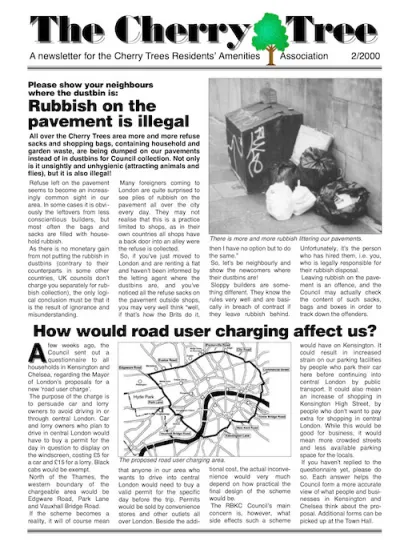 No. 2, 2000
- Will road user charge affect us?
- Rubbish on pavement is illegal
History: “Millionaires’ Row”
-
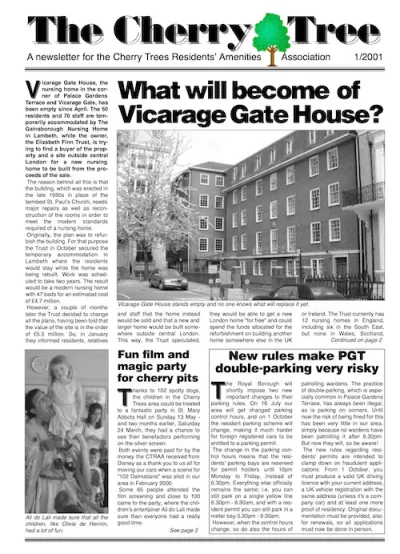 No. 1, 2001
- Nursing home is to be sold
- First “puppy fund” party
History: Church Street (1)
-
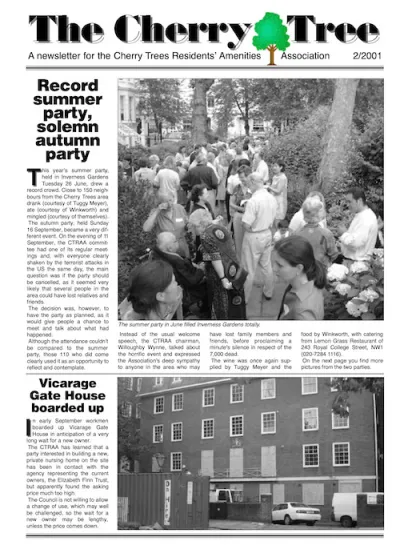 No. 2, 2001
- Summer and autumn parties
- Nursing home now boarded up
History: Church Street (2)
-
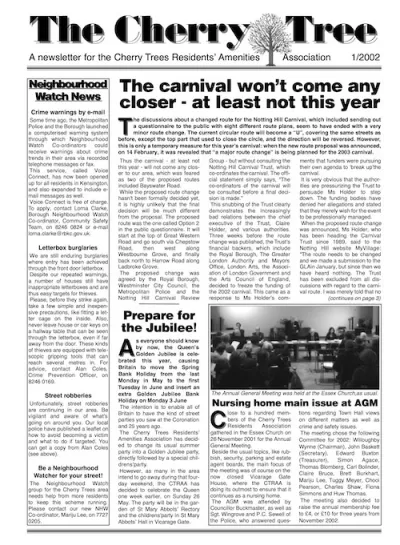 No. 1, 2002
- No change to carnival route
- Texting in the 19th century
History: Kensington Palace (1)
-
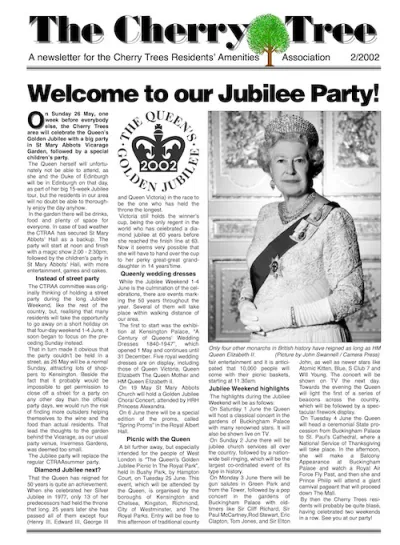 No. 2, 2002
- Welcome to our Jubilee Party
- Agents fined for board fraud
History: Kensington Palace (2)
-
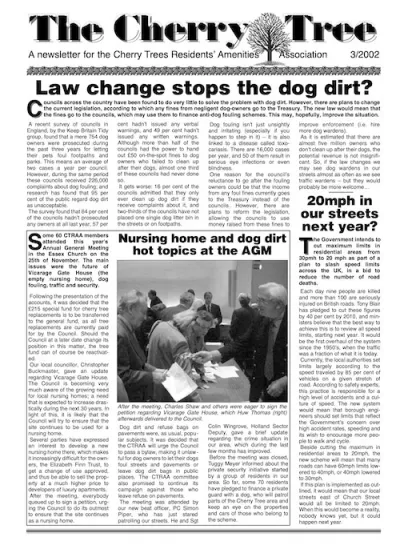 No. 3, 2002
- Law to stop dog dirt?
- 20mph limit next year?
History: Kensington Palace (3)
-
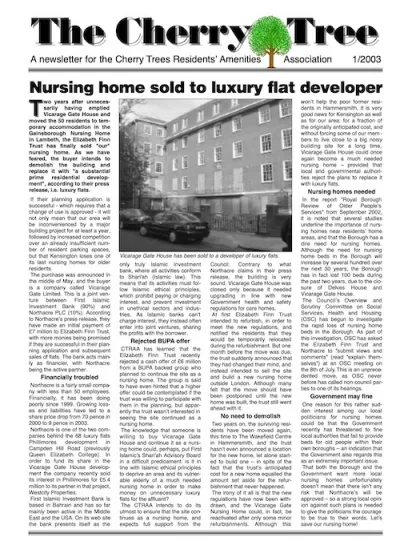 No. 1, 2003
- Nursing home sold to developer
- Second “puppy fund” party
History: 18th-century road tolls
-
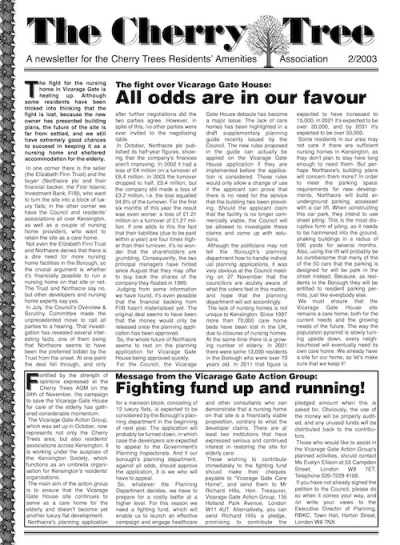 No. 2, 2003
- Fighting for the nursing home
- First party in the vicar’s garden
History: The big scientists
-
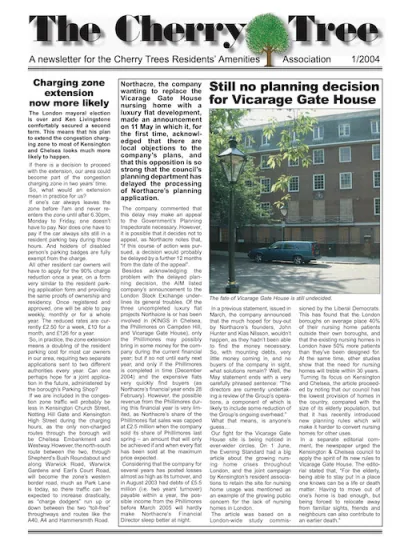 No. 1, 2004
- Nursing home decision delayed
- Congestion charge here as well?
History: The home of artists
-
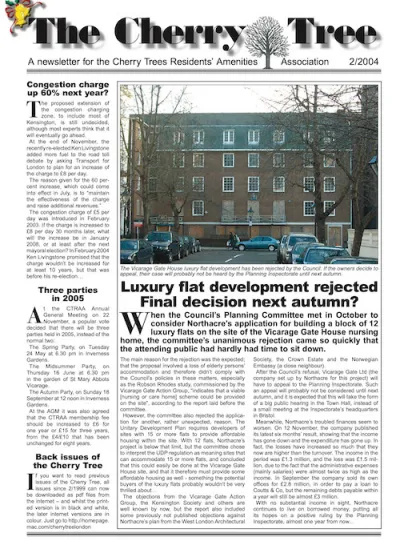 No. 2, 2004
- RBKC rejects nursing home plan
- The very first Christmas card
History: Maria Callcott
-
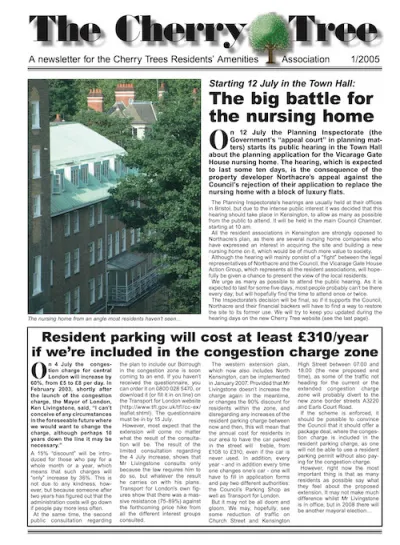 No. 1, 2005
- Nursing home public hearing
- CTRAA now has a website
History: Max Beerbohm
-
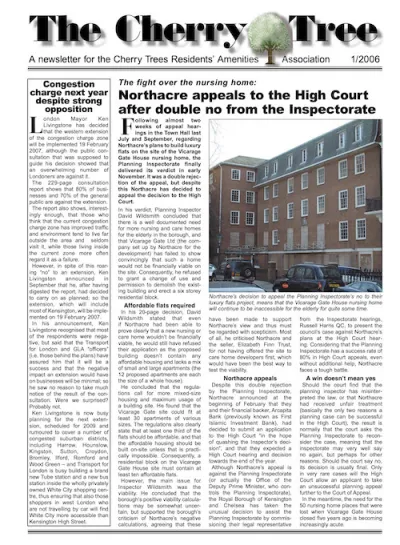 No. 1, 2006
- Inspectorate “no” is appealed
- Congestion charge comes 2007
History: Bye, bye, Barkers
-
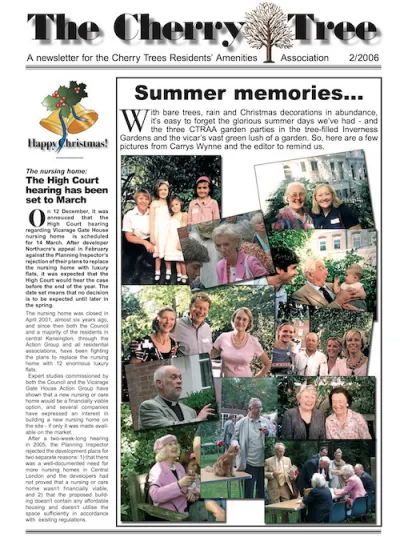 No. 2, 2006
- High Court decides in spring
- Resident parking cost trebles
History: Emily Shackleton